
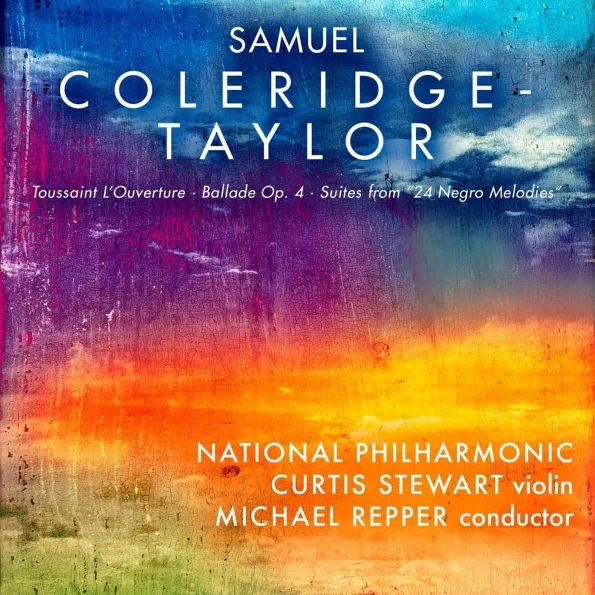
Next year’s Grammy Awards will be held February 1 and nominations of various genres will be chosen, including this album which is up for Best Orchestral Performance and Best Classical Instrumental Solo (Avie Records, 2025). The recording offers never before released rarities that underscore Samuel Coleridge-Taylor’s unique soundworld that is infused with traditional western European and African tonality and rhythms inspired by his English-Sierra Leonean roots. His writing has a refreshing combination of woven structure and imagination which makes it so programmable and listening enjoyable.
These works receive a rich and nuanced performance collaboration by the National Philharmonic under Michael Repper and with violin soloist Curtis Stewart (Artistic Director of American Composers Orchestra) in Ballade in D minor, Op. 4 – a brooding, sentimental, generously scored work evoking a Max Bruchish hue with unexpected tonal shifts. Stewart’s warm, crystal clear tone enhances the ongoing drama of this unusual work. He also pulls off dazzling fingerboard tricks in 3 Selections from 24 Negro Melodies, spinning each into sophisticated, quasi-virtuosic concert pieces. Originally written for piano, these pieces are largely based on African American spirituals of so-called code and gospel songs that include Deep River with a cadenza-like opening (arranged by Stewart and Hamilton Berry), They Will Not Lend Me a Child with pizzicato touches, (arranged by Stewart and Andrew Roitstein) and The Angels Changed My Name (arranged by Stewart) – included in repertoire of the historic Fisk Jubilee Singers since the 1870’s.
Many of Coleridge-Taylor’s works were quite popular during his brief 37 years (1875-1912), such as The Song of Hiawatha, Op. 30 - and his opera Thelma was finally premiered in 2012. The album opens with a brass imbued atmosphere of Toussaint L’Ouverture and concludes with selections from Suite from 24 Negro melodies, Op. 59 where stylish spiritual influenced arrangements are scrumptiously ornamented with brass (kudos to National Philharmonic’s herculean brass section) and lilting strings that draw out the music’s syncopated twists in Scherzo: Ringendjé, harmonic mystery in I’m Troubled in Mind, Intermezzo: Don’t Be Weary, Traveler, soulful Lament: and rhythmic punch of Finale: Oloba with its dance-like swing.
The National Philharmonic gives a flawlessly expressive and compelling performance of Samuel Coleridge-Taylor’s music which allows us to celebrate his creativity and 150th birthday.